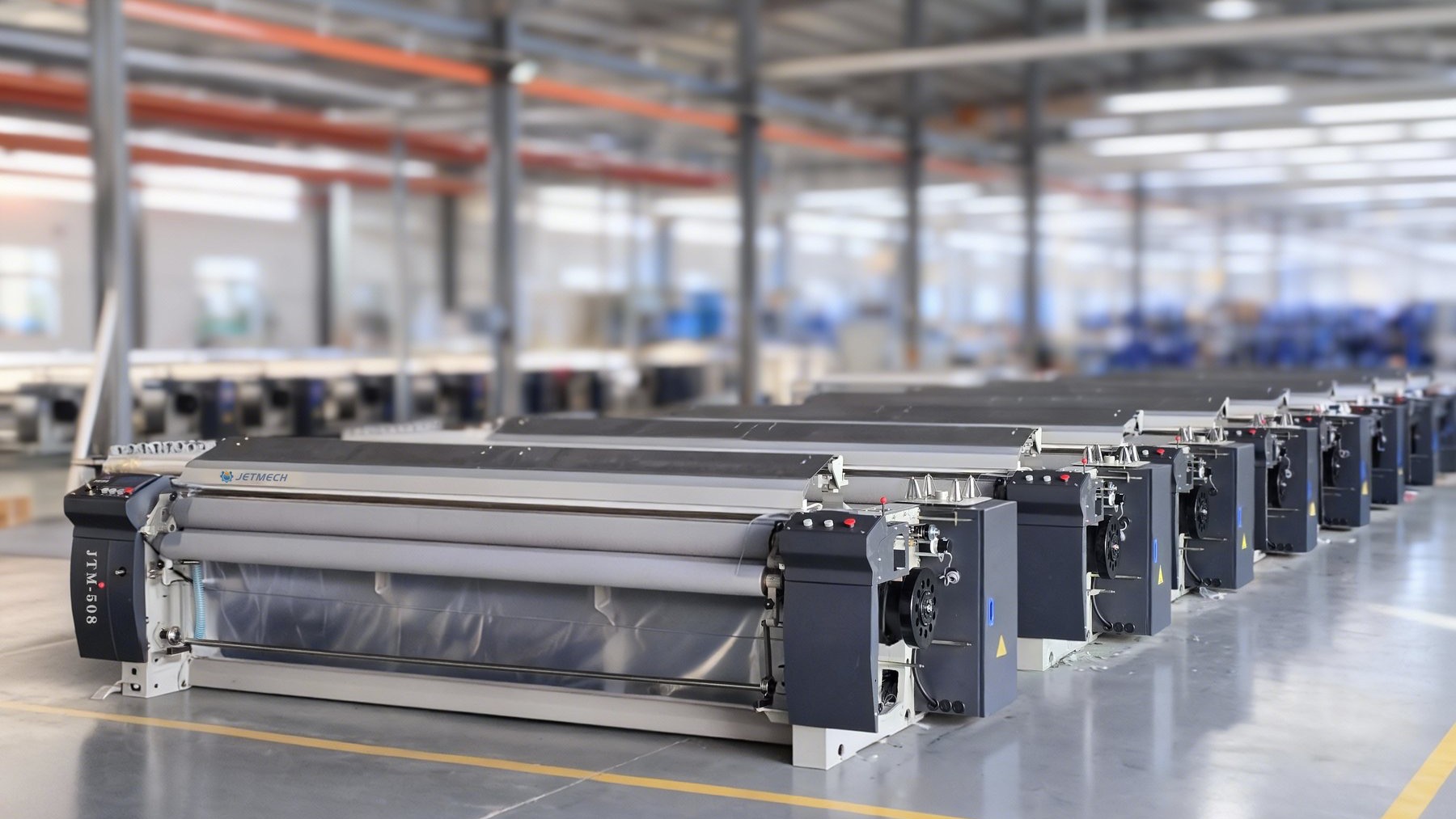
01 / JTM-508
Front View
This overall view shows the loom body, operator-side arrangement, fabric path, protective covers, and the space to allow for installation and daily access.

Qingdao JETMECH Machinery Technology Co., Ltd.
We created this website to give first-time buyers a clear and honest understanding of the JTM508. You can see what each system does, why the main options matter, and what to confirm before making a purchase decision.
Water Jet Loom
Tell us what you plan to weave. JETMECH reviews the fabric type, finished width, weave structure, and target output, then explains which configuration is suitable and what should be included in the quotation.
A waterjet loom works in a humid environment, so long-term reliability begins with the machine body and its corrosion protection. JETMECH combines a heavy-duty body with 304 stainless-steel fasteners and protective covers. Phosphating, electrophoretic coating (E-coat), and three protective paint coats help resist corrosion and support dependable operation over time.
Review the machine views first, followed by the mechanical and electrical systems.
This overall view shows the loom body, operator-side arrangement, fabric path, protective covers, and the space to allow for installation and daily access.

This side brings together the warp let-off, fabric take-up, water-pump, and water-suction drives. Their coordinated operation helps maintain warp tension, even winding, consistent jet pressure, and effective water removal.

The electrical-cabinet side provides access to the controller, wiring, and related electrical components. Keeping this area clear makes inspection, troubleshooting, and service easier.

The rear structure supports and aligns the warp beam for smooth, even warp delivery. Adequate rear access also makes beam loading, setup, and routine service easier.
Heavy-Duty Frame Structure
The left and right HT250 gray-cast-iron side-frame assemblies weigh approximately 570 kg combined. Front and rear pentagonal connecting beams and eight floor anchors—four on each side—form a rigid base that helps maintain alignment and limit vibration during high-speed operation. Center supports and final anchor positions follow the approved installation drawing.

This HT250 frame supports the transmission, beat-up, and bearing assemblies. Its mass, beam connections, and floor anchoring help maintain alignment under continuous high-speed load.

The opposite-side frame and pentagonal support beams complete the rigid machine body. Center supports and approved anchor positions add installation stability.
SHEDDING SYSTEM OPTIONS
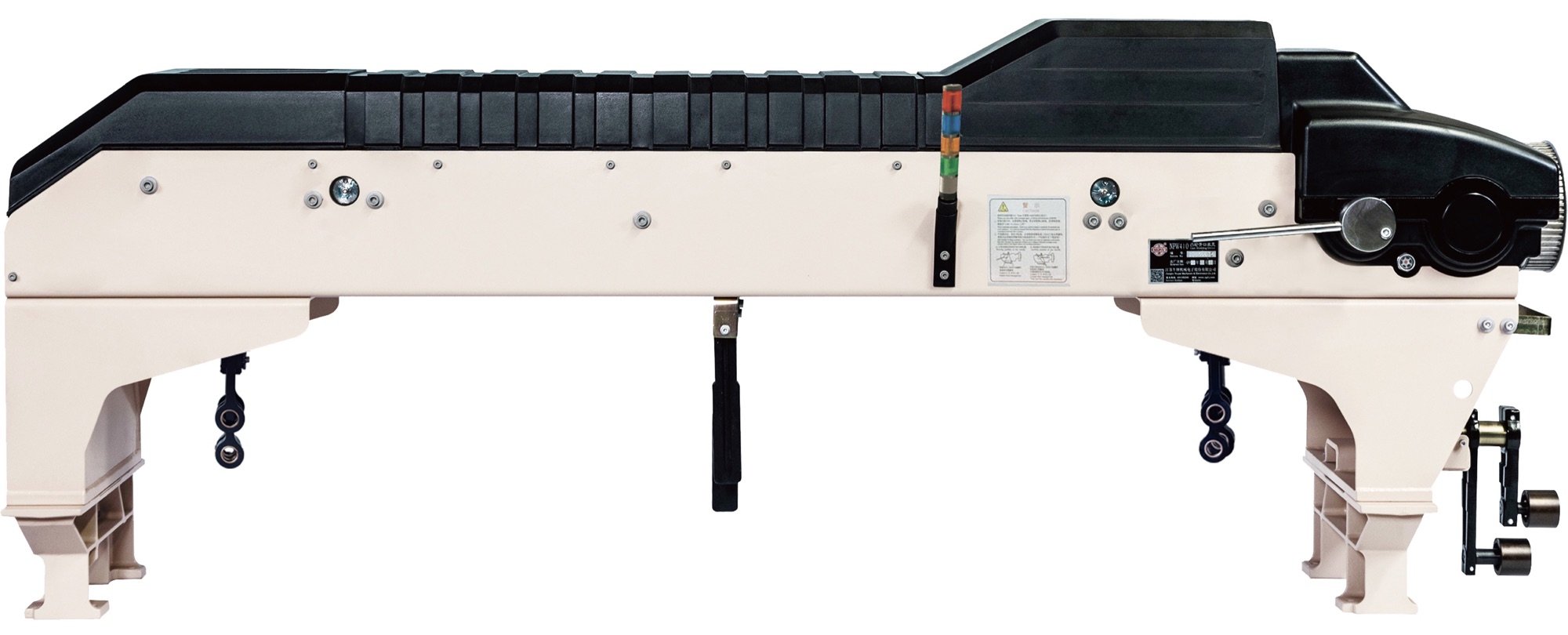
This table compares NPW410, NPW411, and LP409 cam shedding systems with the NP5400D electronic dobby. Crank shedding is a separate option for simple weave repeats. Final selection depends on weave structure, required heald frames, nominal reed space, and target speed.
| Specification | NPW410 CAM | NPW411 CAM | NP5400D Electronic Dobby |
LP409 CAM |
|---|---|---|---|---|
| Nominal reed space | 190–360 cm | 190–360 cm | 190–390 cm | 190–360 cm |
| Supplier-rated maximum speed | 1,000 rpm | 800 rpm | 750 rpm | 800 rpm |
| Heald-frame pitch | 14 mm | 14 mm | 12 mm | 14 mm |
| Maximum heald frames | Up to 10 frames | 12 frames | Up to 16 frames | Up to 12 frames |
| Heddle length | 260 or 280 mm | 260 or 280 mm | 330 mm | 260 or 280 mm |
| Shed opening | 56–113 mm | 56–113 mm | 58–142 mm | 56–113 mm |
| Pattern-repeat capacity | 12 picks | 12 picks | 12,800 picks | 12 picks |
Quick guide: nominal reed space is the maximum supported machine width, while usable fabric width depends on the fabric and setup. Heald-frame count and pattern-repeat capacity indicate pattern flexibility; shed opening is the warp-yarn opening stroke.
The unit shown is NPW410. Values are supplier ratings for the shedding device, not guaranteed loom production speeds. Actual JTM-508 output depends on fabric construction, nominal reed space, weft yarn, shedding system, and machine settings.
Core Mechanical Systems
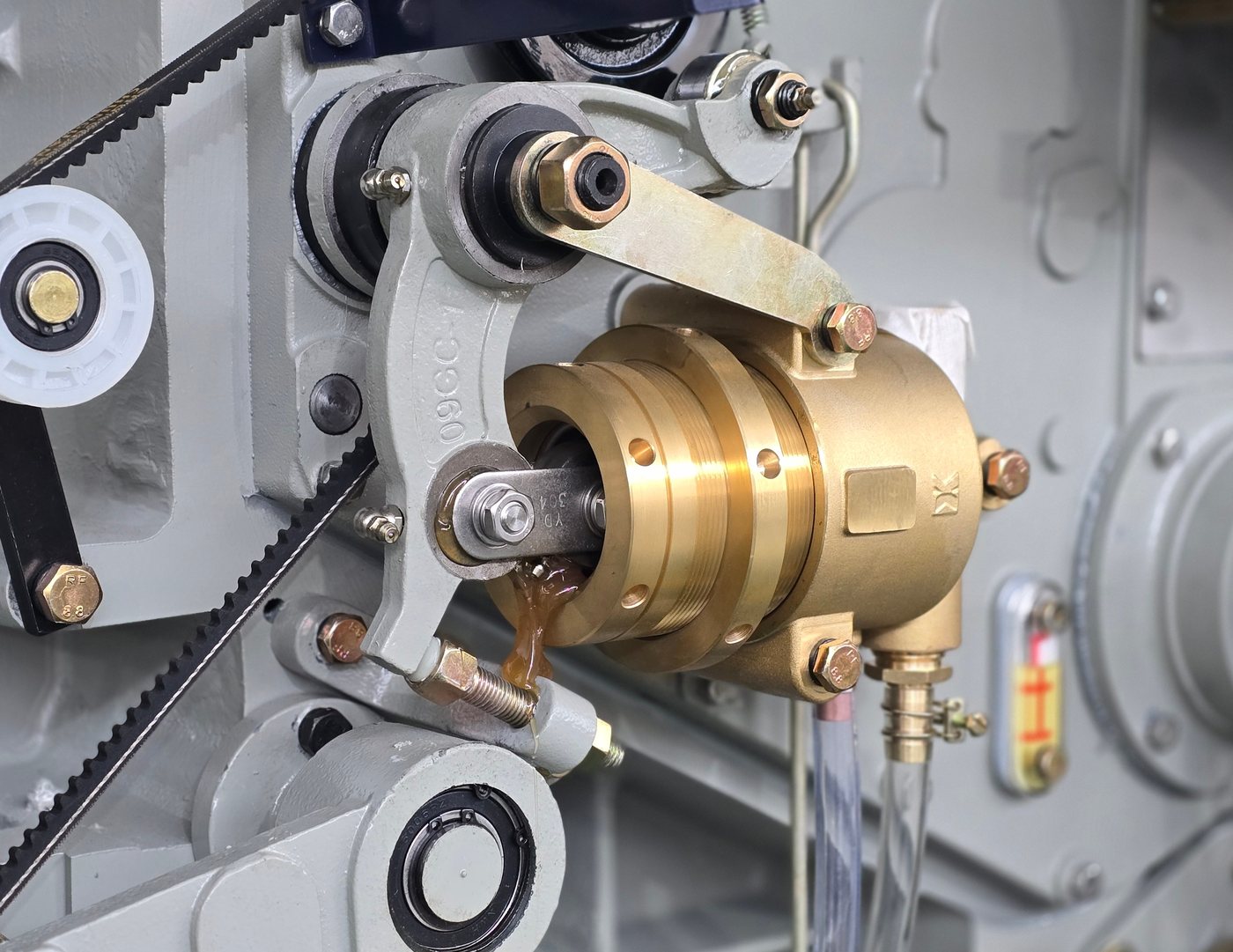
The water pump produces the controlled high-pressure pulse required for weft insertion. Pump model, plunger diameter, and brass fittings are matched to reed width, weft yarn, fabric construction, and target speed.
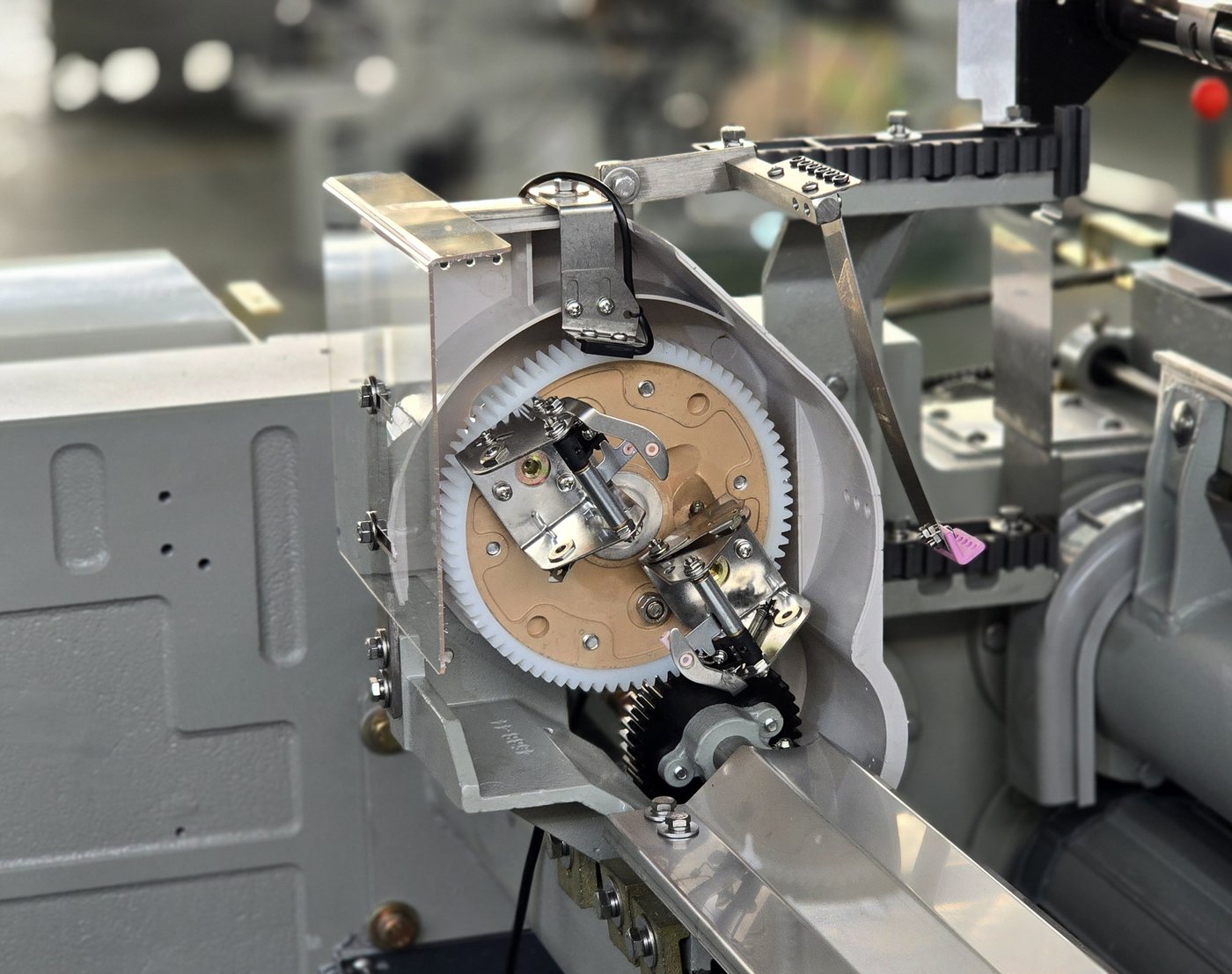
Installed near the fabric edge, the leno device interlaces selected warp ends to form a stable selvage. Its setup is matched to the fabric construction and required edge structure.
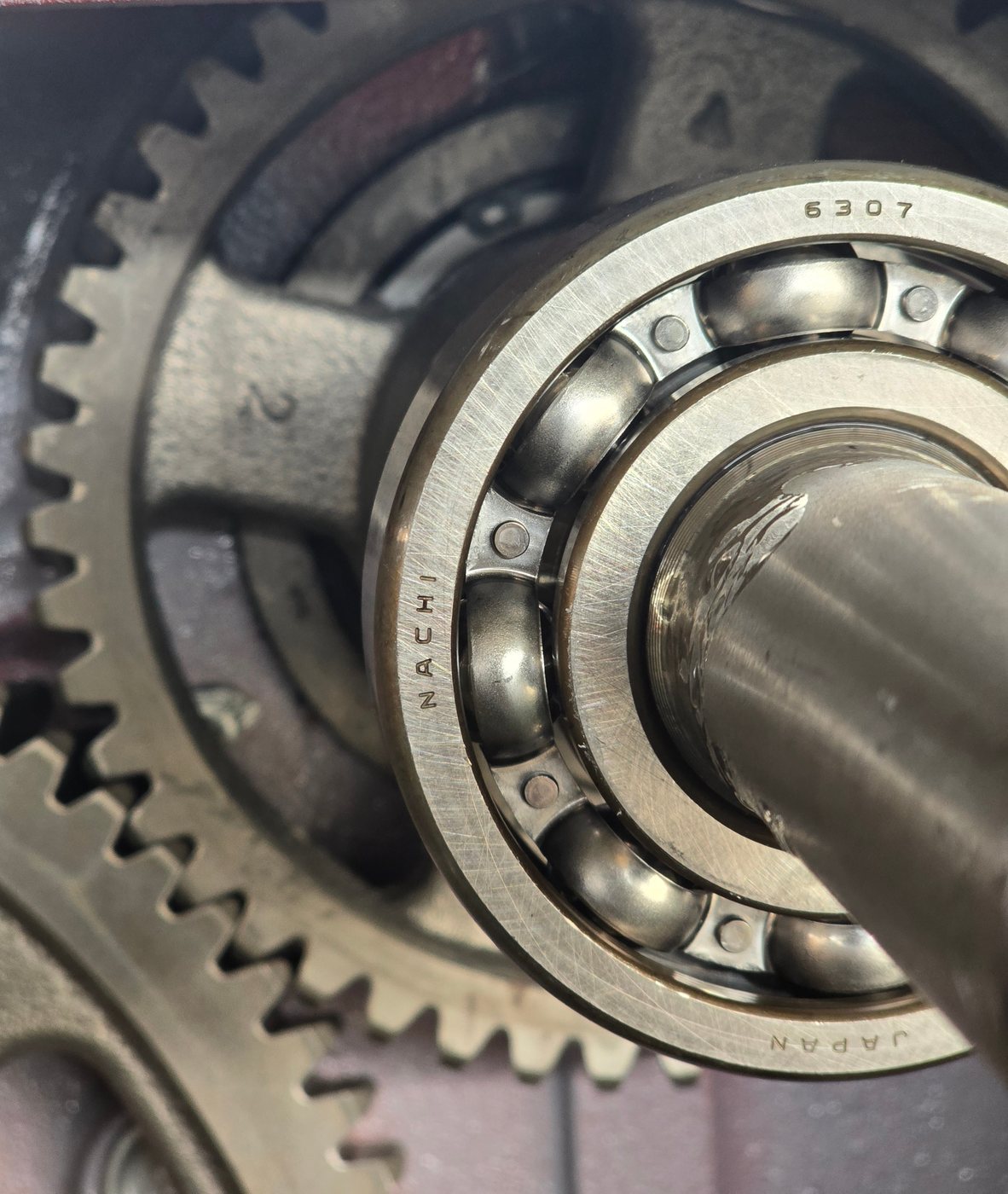
NSK or NACHI bearings are used for the main drive shafts inside the transmission gearbox. Their precision and durability support smooth power transmission and stable high-speed operation.
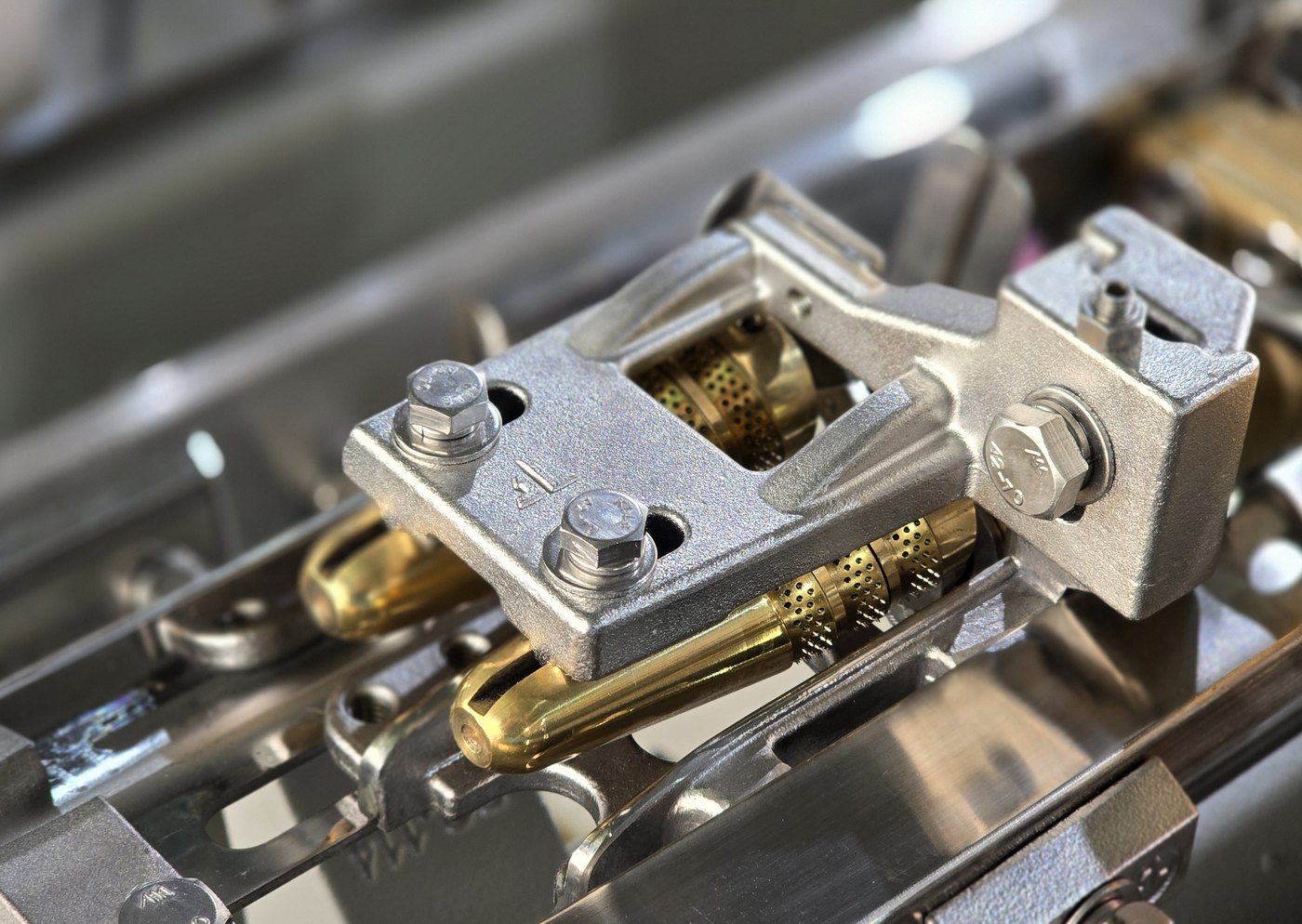
Positioned close to the cloth fell, the temple controls weaving width and helps reduce fabric draw-in. The ring and needle arrangement is matched to the fabric construction.

The precision-machined nozzle holder maintains nozzle position and jet direction. Pump setting, nozzle size, and timing are matched to reed width, weft yarn, and operating speed.
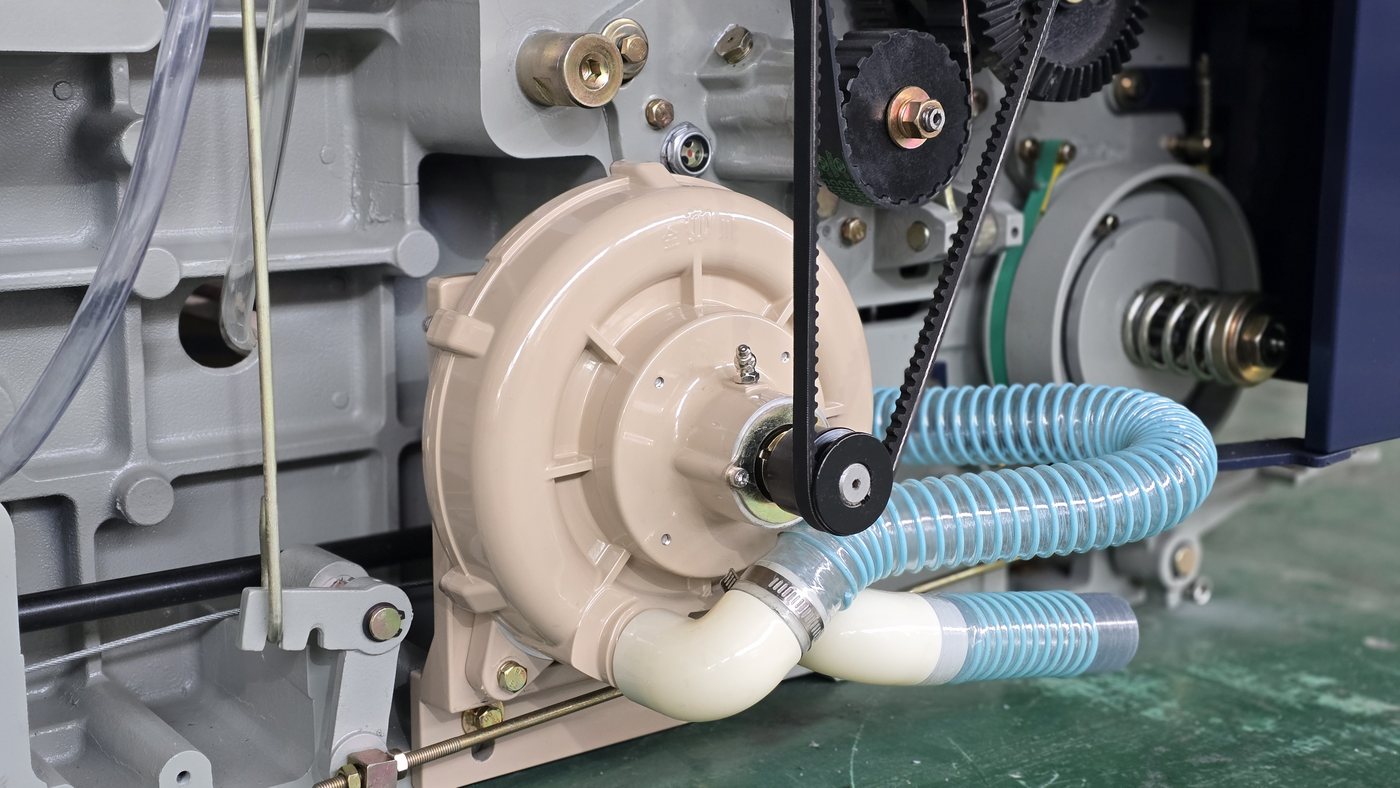
The blower removes residual water after weft insertion. A Ø65 mm SS304 suction pipe and stainless-steel tray form a durable, corrosion-resistant water-removal path.
Control & Drive Systems
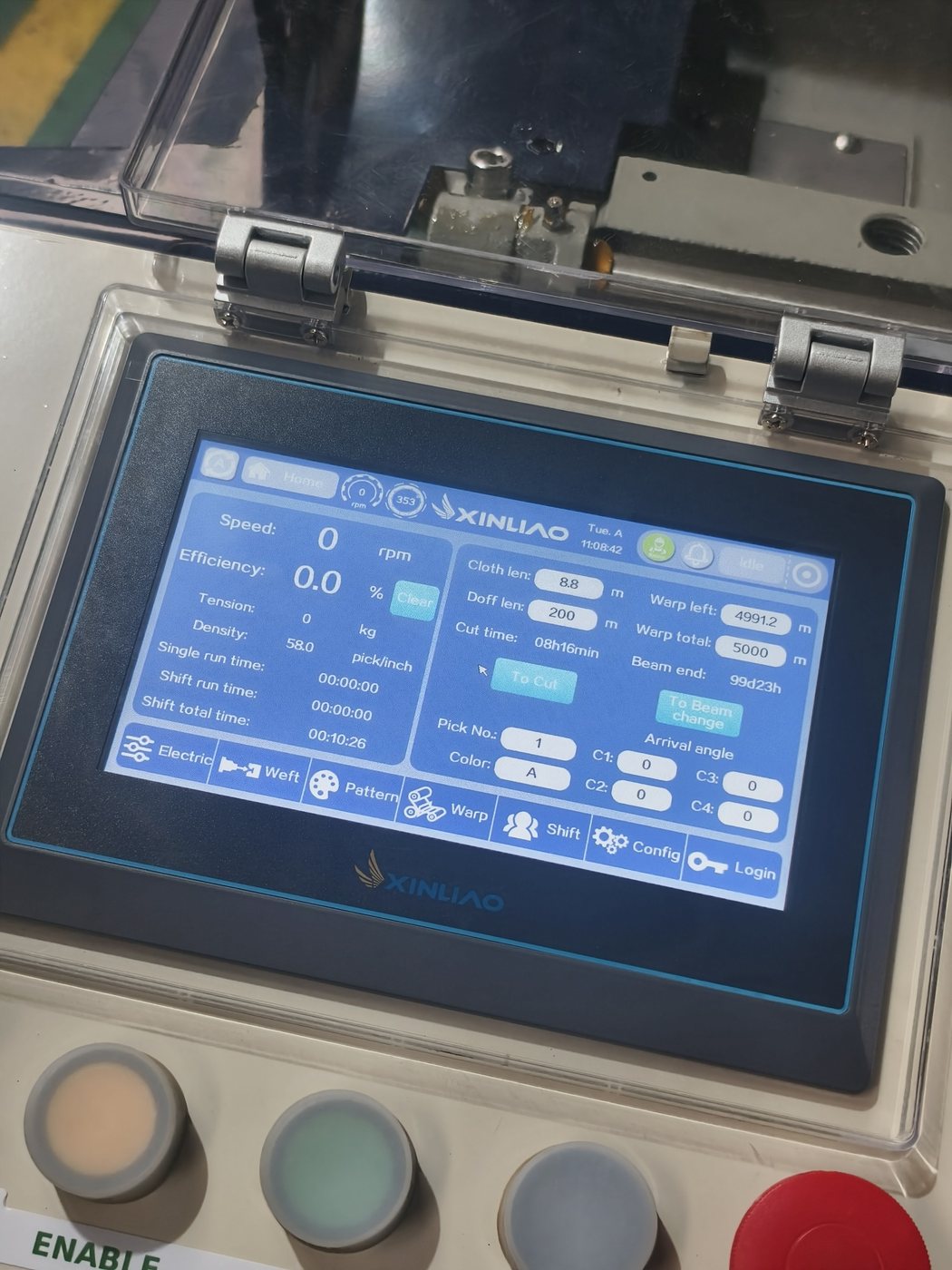
The HMI displays speed, production data, alarms, and key operating parameters. Integrated diagnostics support efficient setup, troubleshooting, and routine operation.
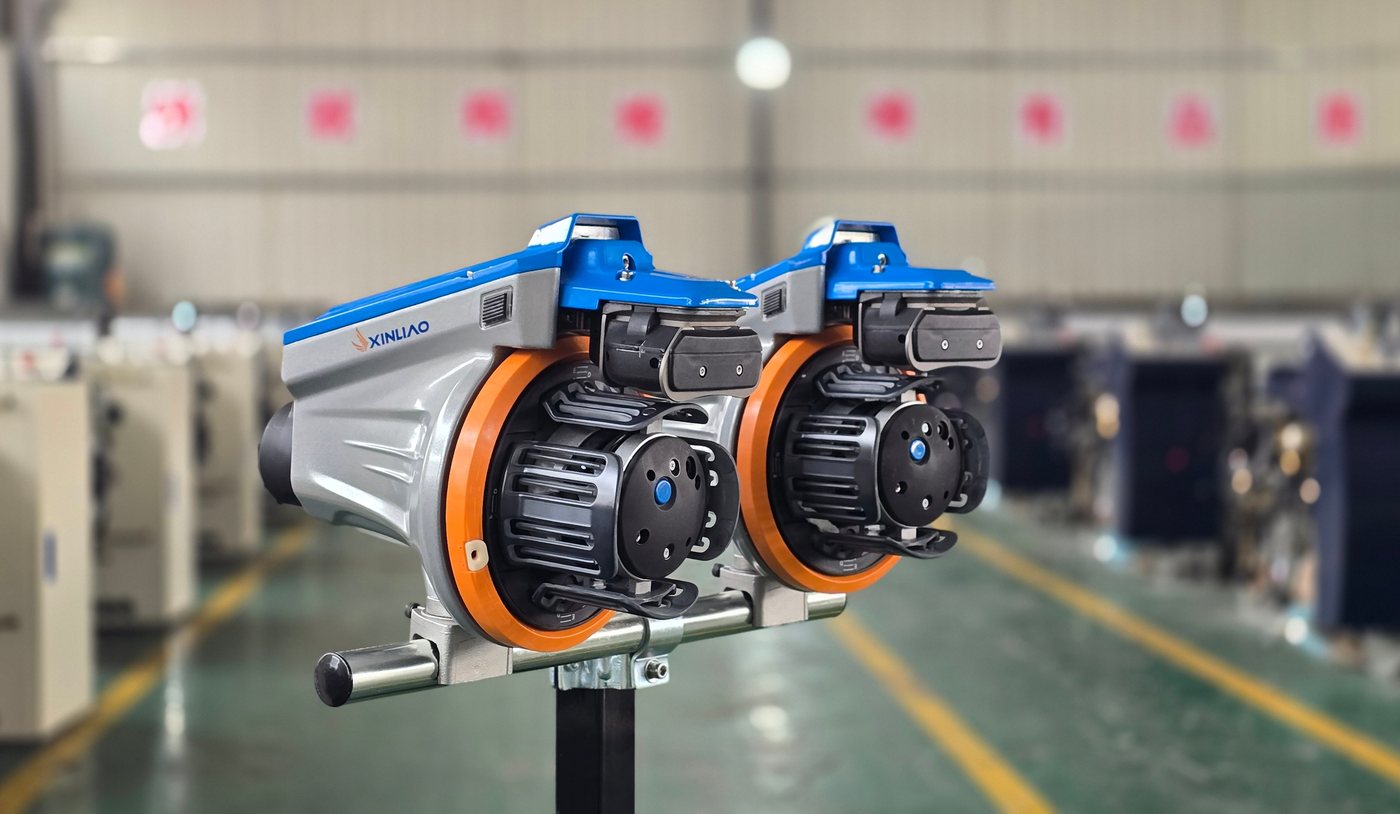
The electronic feeder measures and stores the required weft length, then releases it at the programmed timing. Feeder quantity is confirmed with the customer according to the fabric design and required weft arrangement.
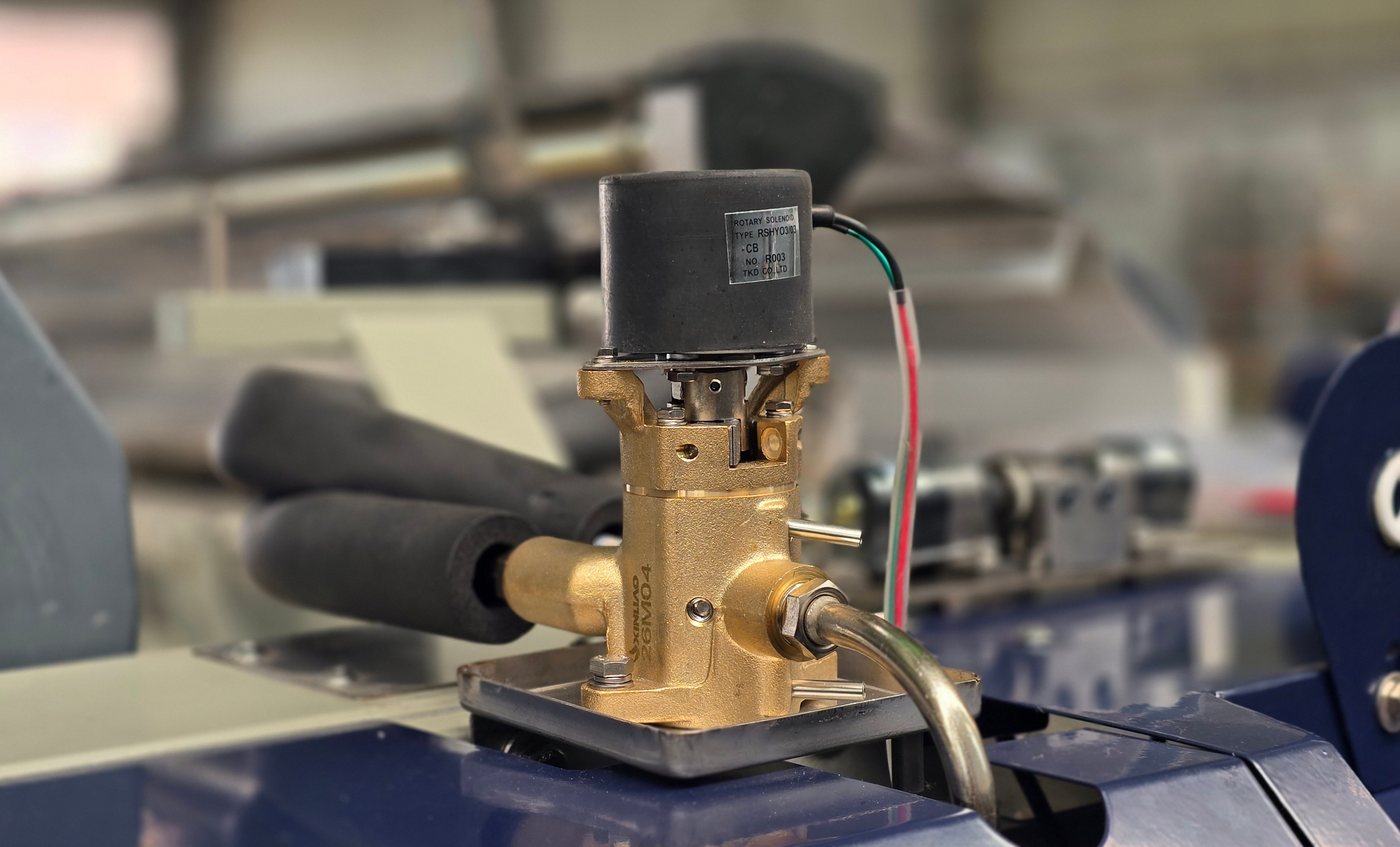
Installed in the water circuit, the valve selects the required jet line in step with the loom control. Its specification is matched to pump output, nozzle size, operating pressure, and the selected weft arrangement.

Mounted on the main-shaft timing assembly, the encoder reports shaft angle to the controller for synchronized feeder release and water-jet actuation.

Electronic let-off regulates warp delivery as beam diameter changes, while electronic take-up maintains programmed pick density. Mechanical let-off and take-up are also available to suit the production plan.
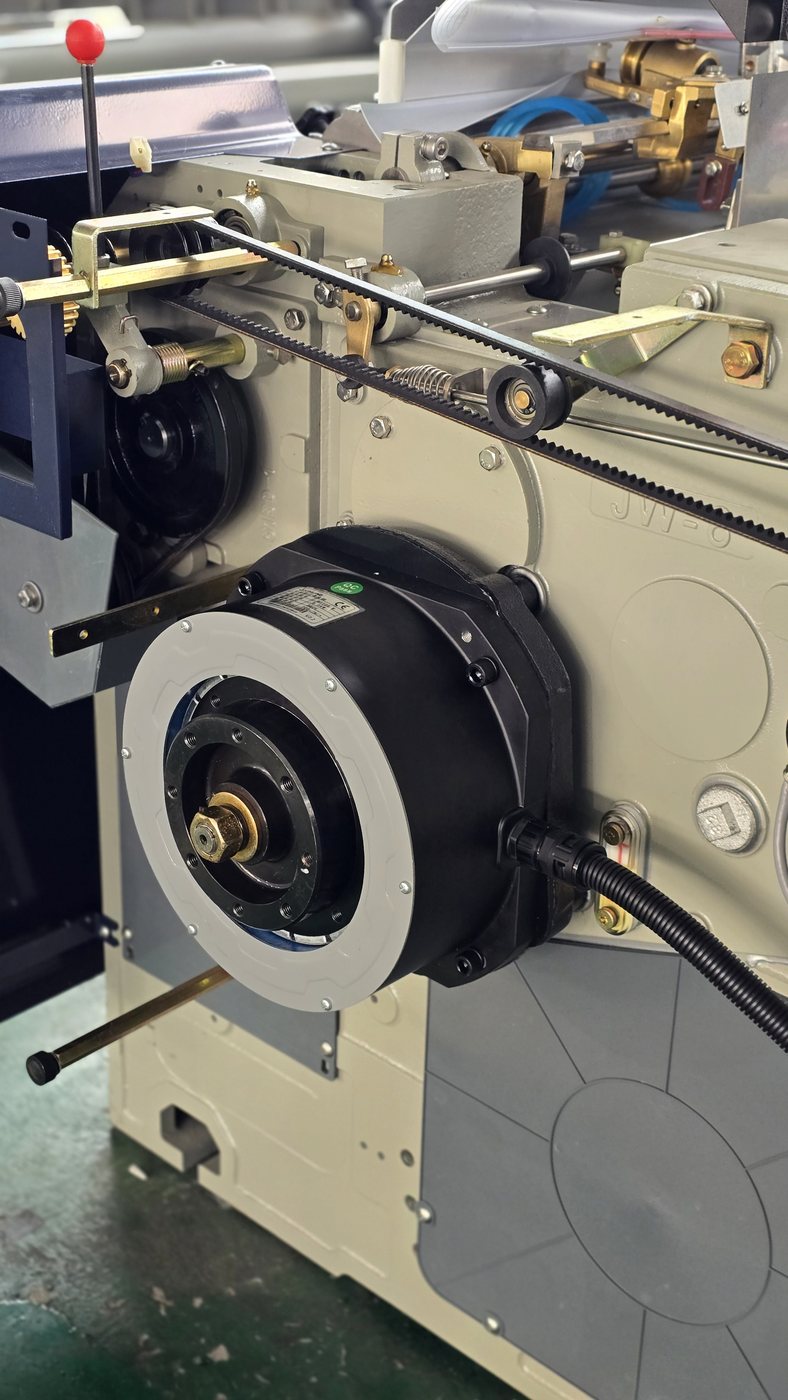
Mounted directly on the main shaft, the X-Motor eliminates the conventional main-drive belt; auxiliary belts may remain in other mechanisms. Fewer main-drive parts can reduce transmission losses, energy use, vibration, and routine maintenance.
Core options customers usually confirm before final model selection and quotation.
Other reed widths available on request
Selected to suit the fabric and weft arrangement
Matched to weave repeat and heald-frame requirement
Direct-drive X-Motor or conventional belt-driven motor
Organized by machine structure, weft insertion, motion system, control, and long-term protection.
JTM-508 water jet loom; final configuration is matched to the fabric and production requirement.
190 cm or 280 cm as standard references; other nominal reed spaces are available on request.
HT250 gray cast iron; approximately 570 kg combined; 880 mm frame height; eight floor anchors, four per side.
1 pump / 2 nozzles or 2 pumps / 2 nozzles, selected according to the fabric and required weft arrangement.
Crank, NPW410 / NPW411 / LP409 cam, or NP5400D electronic dobby.
XINLIAO controller with 7-inch touchscreen.
Two XINLIAO electronic weft feeders are the standard reference; final quantity is confirmed according to the fabric design.
8 / 10 / 12 frames, selected according to the weave pattern and shedding system.
Mechanical or electronic let-off and take-up, selected according to fabric and production requirements.
5.5 kW direct-drive X-Motor or conventional belt-driven motor.
Ø114 mm coaxial beat-up shaft for uniform reed motion across the weaving width.
NSK or NACHI bearings, made in Japan, for the frame and transmission gearbox.
Ø113 mm roller with stainless-steel surface.
Ø65 mm SS304 suction pipe with aluminum-alloy blower and stainless-steel water tray.
Planetary leno selvage device and six-ring temple assembly, matched to the fabric edge and weaving width.
Stainless-steel machine-body covers and stainless-steel electrical-panel cover.
190 cm: one support with two anchors; 280 cm: two supports with four anchors.
Main frame treated by phosphating and electrophoretic coating, followed by protective surface coating and exterior finish paint; stainless-steel fasteners are used.
Brand references and quotation details to confirm before final order discussion.
Please confirm fabric construction, weft yarn, reed width, shedding system, heald-frame count, pump/nozzle arrangement, feeder quantity, let-off/take-up, motor, factory voltage and frequency, and machine color.
BUYER KNOWLEDGE
Start here if you are buying a waterjet loom for the first time. These guides explain how the machine works, which fabrics it suits, what to compare, and how to maintain it.
Learn how a controlled water jet inserts the weft and how the main systems complete each weaving cycle.
MACHINE SELECTION How to Choose a Waterjet Loom for Your FabricStart with yarn, fabric width, weave and target output, then match the pump, nozzle and shedding system.
PARTS AND SYSTEMS Waterjet Loom Parts, Systems and SpecificationsUnderstand the systems that affect weft insertion, fabric formation, tension control and dependable operation.
MAINTENANCE Waterjet Loom Maintenance, Water Quality and Common FaultsUse routine checks to protect the pump, nozzle, cutting, selvage, lubrication and water systems.
Project Support
From the first fabric review to the final export details, we organize the information so the quotation, production plan, and order scope are easier to understand.
We first confirm whether your polyester, nylon, or other synthetic filament fabric is suitable before selecting the machine specification.
We then review the reed width, nozzle option, shedding motion, let-off, take-up, motor, control system, and optional devices with you.
Before ordering, we align the model details, quantity, packing, delivery schedule, payment terms, and spare-parts support.
Water Jet Looms
Company / Applications
Qingdao JETMECH Machinery Technology Co., Ltd. manufactures and supplies JTM508 shuttleless waterjet looms for textile mills worldwide. We begin with each customer's fabric application, nominal reed space, yarn condition, workshop layout, and target output, then recommend a practical machine configuration and support quotation, packing, and export delivery planning.
For JETMECH, the customer experience is as important as the machine specification. We stay in close contact with textile mills during machine development and day-to-day operation. We regard customers as valued partners, and their feedback gives us practical insight into real production needs. This ongoing exchange helps us refine machine details, improve product quality, and deliver a better operating experience.
Knowledge & Progress
JETMECH works with textile mills to understand their fabric and production needs. We share practical waterjet loom knowledge so customers can make clearer equipment decisions and build a reliable production plan.
Send us your fabric construction, finished width, weave, weft yarn, target output, and factory voltage. We will explain the suitable configuration and prepare a clear quotation scope for discussion.
Chat on WhatsApp +86 137 5433 5920 Email: hanseco@163.com